
Textile Exchange has introduced the Materials Matter Standard, a new framework that reshapes how certain materials are certified to Textile Exchange standards in the years ahead. For producers, manufacturers, traders, and brands — whether currently certified or not — now is the right time to understand what Materials Matter is, which materials it covers, and what steps may be needed to prepare.
IDFL hosted webinars for the different tiers, with guest speakers from Textile Exchange, to discuss the Materials Matter Standard, answer questions, and provide further clarity. Watch these webinars for an overview of the transition and the Materials Matter Standard:
- IDFL and Textile Exchange Webinar – Materials Matter for Tiers 0-3
- IDFL and Textile Exchange Webinar – Materials Matter for Tier 4
Below is a high-level overview of the most important questions organizations are asking today, along with key documents to review for those wanting to learn more.
Frequently Asked Questions
1) What is the Materials Matter Standard?
The Materials Matter Standard is Textile Exchange’s new standard for the production and primary processing of specific raw materials. It is part of a broader Materials Matter system, which also includes supporting policies, claims rules, and assurance requirements.
At a high level, the Materials Matter Standard is intended to:
- bring selected existing Textile Exchange standards into a more harmonized system,
- support a more consistent certification framework,
- strengthen alignment across material categories,
- and provide clearer rules for material certification and claims.
The Materials Matter Standard is focused primarily on Tier 4 raw material production and primary processing, and addresses key sustainability topics such as:
- Environmental management
- Land, water, and energy use
- Working conditions
- Animal welfare
(2) Which current Textile Exchange certifications are transitioning to the Materials Matter Standard?
The following existing standards that will transition into the Materials Matter Standard according to the official timeline include:
- GRS – Global Recycled Standard
- RCS – Recycled Claim Standard
- RWS – Responsible Wool Standard
- RMS – Responsible Mohair Standard
- RAS – Responsible Alpaca Standard
Not all Textile Exchange standards are moving into Materials Matter. The following remain outside the scope of Materials Matter and will continue under their existing frameworks:
- OCS – Organic Content Standard
- RDS – Responsible Down Standard
(3) What are the transition timelines and key dates?
The transition to Materials Matter happens in stages. Below are the key dates:
- December 31, 2026 – Materials Matter becomes effective. From this date onward, audits may be conducted to Materials Matter.
- December 31, 2027 – Materials Matter becomes mandatory. From this date onward, all covered audits must be conducted to Materials Matter rather than the legacy standards it supersedes.
- March 31, 2029 – Major transition deadline, including:
- withdrawal or reduction of remaining legacy scope certificates for GRS, RCS, RWS, RMS, and RAS,
- final deadline for many legacy scope arrangements in Tiers 0–3,
- final date for complete and valid applications for GRS, RCS, and RAF transaction certificates.
- April 14, 2029 – Certification bodies may no longer issue transaction certificates for GRS, RCS, or RAF standards after this date.
- June 30, 2029 – Legacy online and non-printed claims must be updated to approved Materials Matter claims/artwork before this date where applicable.
Because different requirements apply by tier, standard, and claim type, organizations should review the transition policy carefully.
(4) Which fibers and materials are covered by Materials Matter?
Materials Matter applies to defined materials and activities within the scope established by TE-MM-POL-101 Materials Matter Scope and Eligibility Policy.
At a high level, the categories transitioning into Materials Matter can be understood as follows:
Animal Materials:
- Wool
- Mohair
- Alpaca
These materials correspond to the current standards:
- RWS
- RMS
- RAS
Recycled Materials:
- Materials Matter also includes recycled materials through the transition of GRS and RCS.
Organizations working with recycled materials should pay particular attention to the transition rules, because the policy distinguishes between GRS and RCS in important ways.
For example:
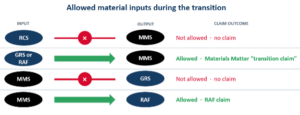
- RCS-certified materials are not eligible for inputs into Materials Matter Certified products.
- Recyclers transitioning from RCS to Materials Matter may see a significant increase in environmental, chemical, and social criteria.
Animal Fiber Processing Facilities:
- Materials Matter also includes criteria relevant to certain animal fiber primary processors and processing facilities, supported by dedicated excerpt documentation.
- In the Materials Matter Standard, primary processing for animal materials includes all pre-spinning processes, defining these sites as Tier 4 and subject to all Materials Matter criteria. Where applicable, this includes—but is not limited to—all steps between sorting and grading and combed-top or carded-sliver output. For example, scouring, carbonizing, drying, carding, combing, and top making.
(5) How does Materials Matter affect my current certifications?
The answer depends largely on where you operate in the supply chain.
For Tier 4 organizations
Tier 4 organizations include recyclers, raw material producers (farms), and primary processors. If you are currently certified to GRS, RCS, RWS, RMS, or RAS at this level, your certification pathway is expected to transition to Materials Matter according to the published timeline.
Key points for Tier 4 organizations include:
- You must hold a valid Materials Matter scope certificate to make Materials Matter claims.
- After the effective and mandatory dates, audits must transition to Materials Matter according to the applicable rules.
- Tier 4 organizations may not hold GRS and/or RAF scope certificates at the same time as Materials Matter, except where transition rules allow for sale of existing inventory.
- Tier 4 organizations may hold RCS and Materials Matter at the same time only for inventoried RCS-certified material.
- Recyclers transitioning from RCS and certain animal fiber primary processing sites that Textile Exchange defines as Tier 4, should expect a significant increase in environmental, chemical, and social criteria.
- RCS certified organizations who do not plan to transition to the Materials Matter shall not be eligible for an RCS audit as of December 31, 2027, and shall cease being certified upon expiry of the scope certificate issued from their last audit. Any remaining RCS scope certificates shall be withdrawn on March 31, 2029
- Tier 4 organizations scope certificate validity is now three years.
For Tiers 0–3 organizations
For organizations in Tiers 0–3, the transition works differently.
Key points include:
- Tiers 0–3 organizations must hold a valid Materials Matter scope certificate to make Materials Matter certification claims.
- They may update their scope certificates to Materials Matter without an additional audit.
- During the transition period, they may hold Materials Matter and legacy scopes at the same time.
- Remaining scope certificates for GRS, RCS, RWS, RMS, and RAS must be withdrawn or reduced no later than March 31, 2029.
- Note that tiers 0-3 organizations that wish to continue the social and environmental criteria that was part of the GRS will have the option to add these as additional scopes. Textile Exchange is to publish these modules in 2027.
Important note for current GRS + CCS organizations: The transition policy specifically states that non-Tier 4 certified organizations currently certified to GRS and CCS shall transition to CCS only within the same transition timeline.
(6) Will claims and labeling change under Materials Matter?
Yes. Claims and labeling are a major part of the transition and are governed by the TE-MM-POL-301 Materials Matter Claims and Labeling Policy and the transitional provisions in TE-MM-POL-102.
At a high level:
- Organizations may make Materials Matter claims only if they hold a valid Materials Matter scope certificate and have signed the required trademark license agreement.
- Legacy claims under GRS, RCS, RWS, RMS, and RAS may continue only until the relevant scope is withdrawn.
- As of the effective date:
- GRS, RWS, RMS, and RAS certified materials and products may be accepted as eligible inputs into Materials Matter Certified products using a transition claim option
- RCS-certified materials are not eligible for inputs into Materials Matter Certified products.
- When transitioned inputs are used, subsequent product claims may need to use a transition claim option rather than a standard Materials Matter claim.
- After the relevant mandatory date or withdrawal of legacy scopes
- all new product claims must be Materials Matter claims,
- and older GRS/RCS/RWS/RMS/RAS claims and artwork will no longer be accepted for new approvals.
This is especially important for:
- manufacturers managing certified production,
- traders handling certified inventory,
- and brands reviewing labels, e-commerce claims, packaging, and customer-facing communications.
(7) If I am already certified to a Textile Exchange standard, how can I best prepare for Materials Matter?
If your organization already holds one or more Textile Exchange certifications, now is the time to begin preparing.
Recommended next steps include:
- identify which standards your organization currently holds,
- determine whether those standards are transitioning into Materials Matter,
- confirm whether your operations are Tier 4 or Tiers 0–3 under the transition framework,
- review the scope and eligibility rules in TE-MM-POL-101,
- review claims implications in TE-MM-POL-301,
- compare your current certification requirements to Materials Matter using TE-MM-GUI-102,
- and begin discussions with your certification body and internal teams about audit planning, claims management, and certificate updates.
Early planning will help reduce confusion and avoid disruption later in the transition.
(8) If I am not currently certified, why does the Materials Matter Standard matter to me?
Even if your organization is not currently certified, Materials Matter may still affect your business.
The Materials Matter Standard matters because it may shape:
- future sourcing expectations from brands and retailers,
- certification decisions for producers and processors,
- eligibility for participation in certified supply chains,
- customer requirements for claims and traceability,
- and internal compliance planning for sustainability and market access.
For non-certified organizations, this is a good time to understand whether your materials or activities fall within Materials Matter scope, what certification pathways may apply in the future, and how customer expectations may change as the transition progresses.
Key Documents
To understand Materials Matter more fully, the following documents are especially important:
- TE-MM-STN-101 Materials Matter Standard
- Purpose: The core standard document establishing the Materials Matter framework and criteria.
- Use: Review this document to understand the overall structure and requirements of the Materials Matter Standard.
- Reference: https://textileexchange.org/knowledge-center/documents/materials-matter- standard/
- TE-MM-POL-102 Materials Matter Transition Policy
- Purpose: Defines how certified organizations, certification bodies, and accreditation bodies transition from selected legacy standards into Materials Matter.
- Use: Essential for understanding implementation dates, transition deadlines, certificate handling, transaction certificate rules, and transitional claim requirements.
- Reference: https://textileexchange.org/knowledge-center/documents/materials-matter-transition-policy/
- TE-MM-POL-101 Materials Matter Scope and Eligibility Policy
- Purpose: Defines which organizations, activities, materials, and supply-chain roles are within scope for Materials Matter.
- Use: Review this document to determine whether your organization and materials are eligible and how Materials Matter applies to your operations.
- Reference: https://textileexchange.org/knowledge-center/documents/materials-matter-scope-and-eligibility-policy/
- TE-MM-POL-301 Materials Matter Claims and Labeling Policy
- Purpose: Sets the rules for Materials Matter claims, labeling, and trademark-related use.
- Use: Essential for any organization communicating certification claims in business-to-business or customer-facing contexts.
- Reference: https://textileexchange.org/knowledge-center/documents/materials-matter-claims-and-labeling-policy/
- TE-MM- GUI-102 Mapping Current Standards to the Materials Matter Standard
- Purpose: Helps organizations compare current Textile Exchange standards with Materials Matter and understand where criteria have changed.
- Use: Particularly useful for organizations transitioning from GRS, RCS, RWS, RMS, or RAS.
- Reference: https://textileexchange.org/knowledge-center/documents/te-mm-gui-102-mapping-current-standards-to-the-materials-matter-standard/
Other Supporting Excerpt Documents
Textile Exchange has also published excerpt documents that can help organizations focus on the criteria most relevant to their operations:
- TE-MM-STN-101A Materials Matter Standard Excerpt: Criteria for Wool
- TE-MM-STN-101B Materials Matter Standard Excerpt: Criteria for Mohair
- TE-MM-STN-101C Materials Matter Standard Excerpt: Criteria for Alpaca
- TE-MM-STN-101D Materials Matter Standard Excerpt: Criteria for Animal Fiber Processing Facilities
- TE-MM-STN-101E Materials Matter Standard Excerpt: Criteria for Recycled Materials
These documents are especially useful for:
- producers looking for material-specific requirements,
- processing facilities identifying applicable criteria,
- certification teams preparing for implementation,
- and brands and traders seeking a clearer understanding of upstream requirements.
Why This Matters Across the Supply Chain
The shift to Materials Matter is significant because it affects different parts of the supply chain in different ways.
- Producers need to understand how certification expectations may change at raw material level.
- Primary processors need to review how Materials Matter may affect scope, audits, and operational requirements.
- Manufacturers and traders need to understand claim eligibility, certificate transitions, and material segregation requirements.
- Brands and retailers need to prepare for sourcing, communication, and claim transitions across supplier networks.
For many organizations, the transition is not just administrative — it may also require updated internal processes, revised customer communication, and closer coordination with certification partners.